Future of AR & VR
1. what is Future of AR & VR?
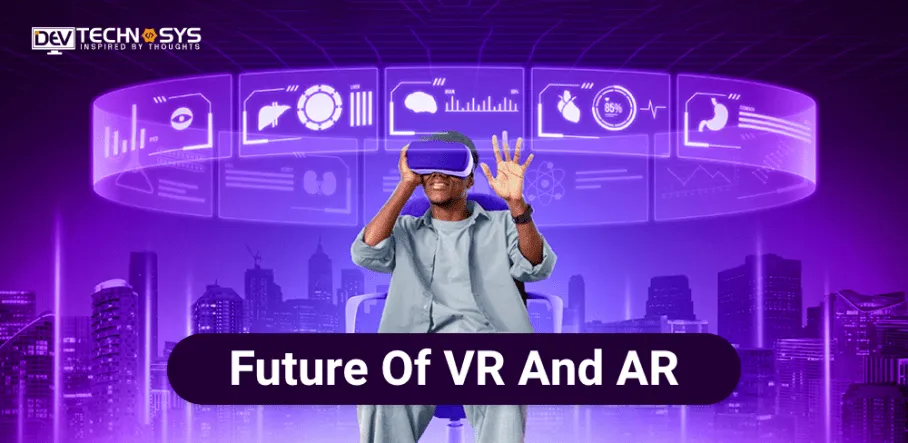
Future of AR & VR is incredibly promising, with technology continuing to evolve rapidly and reshape various industries. As hardware and software improvements continue to reduce costs and enhance performance, both AR and VR are expected to see broader adoption across multiple sectors. In particular, industries like education, healthcare, entertainment, gaming, and manufacturing are likely to experience transformative changes driven by AR and VR technologies. In education, VR can provide immersive learning experiences that simulate real-world environments, while AR can enhance classroom experiences by overlaying information directly onto physical objects, making learning more interactive and engaging. In healthcare, VR therapy is already being used for mental health treatments, and AR can assist surgeons with real-time guidance during procedures.
One of the most exciting developments in the future of AR and VR is the potential for creating a "metaverse"—a fully immersive digital universe where users can interact, socialize, work, and play in virtual environments. As VR becomes more sophisticated, it is expected to enable more lifelike avatars and environments, which will revolutionize virtual workspaces, gaming, and social interactions. AR, on the other hand, will continue to enhance the physical world by superimposing digital elements over the real world, allowing for smarter cities, interactive advertising, and smarter consumer products. For example, AR glasses and contact lenses could one day replace smartphones, providing instant access to information and communication directly in our line of sight.
AI integration will play a significant role in the future of AR and VR, enabling systems to become more intelligent, adaptive, and responsive to user needs. With AI, AR and VR experiences will be more personalized, learning from user behaviors and preferences to provide customized experiences. For instance, in VR gaming, AI can help create dynamic storylines that evolve based on player choices, while in AR shopping, AI could provide instant recommendations based on a customer’s preferences and surroundings. Moreover, as cloud computing advances, the heavy processing required for AR and VR can be offloaded to cloud servers, allowing for more complex and graphically intensive applications on lightweight devices, making AR and VR more accessible to the average consumer. The future of AR and VR promises to redefine how we interact with the digital world, offering more immersive, interactive, and intelligent experiences.
2.AR Cloud & Persistent AR
AR Cloud & Persistent AR
refers to a shared, persistent, and real-time digital layer that exists over the physical world, enabling augmented reality experiences to be consistent and interconnected across different devices and locations. Essentially, the AR Cloud allows AR content—such as 3D objects, information, or interactive elements—to be stored, accessed, and updated on the cloud, ensuring that it remains consistent for users as they move through different environments. This cloud-based framework enables various users to interact with the same AR experiences in real-time, regardless of their physical location, and allows for the integration of large-scale, real-time data, such as geographic and environmental information, to create richer, more immersive AR experiences.
One of the key aspects of AR Cloud is spatial mapping, where the environment is mapped digitally using sensors and cameras to create a 3D model of the space. This model is then stored and shared across the cloud, allowing for accurate placement of virtual objects in physical locations. For example, in an AR navigation system, the AR Cloud can provide persistent routes, landmarks, and directions across different devices and locations, ensuring continuity as users move through different areas. Additionally, AR Cloud can enable collaborative AR experiences, where multiple users can interact with the same virtual objects or scenarios in the same physical space, even if they are not physically together.
Persistent AR refers to the ability of augmented reality experiences to remain intact and accessible over time and across various locations. Unlike traditional AR experiences, which might only exist temporarily or in one specific instance, persistent AR allows virtual objects and information to remain anchored to real-world locations, providing a seamless experience for users who return to the same space. For example, a company might create an AR art installation that users can revisit over time, and the artwork will always appear in the same physical location, regardless of when or how many times it is accessed. This persistence enhances the long-term value of AR experiences, turning them into lasting, interactive digital elements that integrate seamlessly with the physical world.

3.5G-powered AR/VR
AR for Medical Training
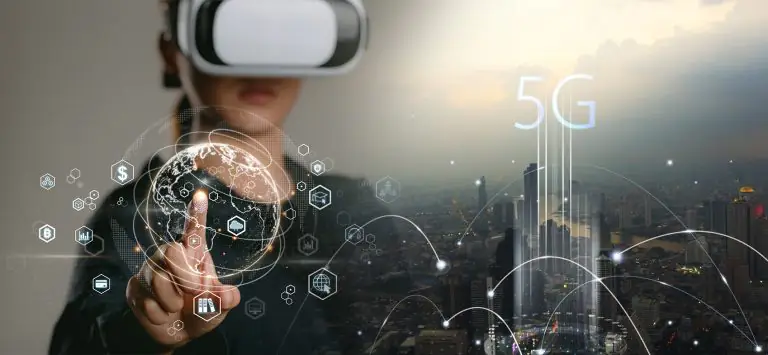
refers to the integration of 5G networks with augmented reality (AR) and virtual reality (VR) technologies to enhance their capabilities and user experiences. 5G, with its ultra-fast data transfer speeds, low latency, and ability to support a large number of connected devices, provides the ideal network infrastructure for immersive AR and VR applications. It allows for real-time streaming, smooth interaction, and high-quality visual experiences that are critical for delivering the next level of immersive media in both AR and VR.
In AR applications, 5G enables faster data processing and transmission, allowing AR devices like smart glasses or mobile phones to quickly process and display high-quality augmented content with minimal lag. This is crucial for real-time interaction with digital objects or information overlaid on the physical world. For example, 5G can power augmented reality navigation, where users receive real-time directions and contextual information while walking through crowded streets or indoor environments, with no delay or buffering. Additionally, 5G can support cloud-based AR experiences, where the heavy processing is done in the cloud, and users can access and interact with complex AR content without requiring powerful hardware on their own devices.
In VR, 5G takes immersive experiences to a new level by reducing latency, which is essential for a smooth and responsive experience. VR relies heavily on high bandwidth to stream high-resolution content, and with 5G’s increased download speeds, users can enjoy rich, lifelike VR worlds without interruptions or lag. For example, 5G enables seamless multiplayer VR gaming, where players from around the world can interact in real-time with minimal delay. Furthermore, the increased network speed allows VR experiences such as live 360-degree video streaming or remote collaboration in VR spaces to be more accessible and smoother, even in high-motion or complex environments. This technology has immense potential in VR-based training, virtual tourism, or immersive healthcare simulations, where real-time data processing and cloud computing are key to providing realistic, interactive experiences.
AR for Medical Training
refers to the integration of 5G networks with augmented reality (AR) and virtual reality (VR) technologies to enhance their capabilities and user experiences. 5G, with its ultra-fast data transfer speeds, low latency, and ability to support a large number of connected devices, provides the ideal network infrastructure for immersive AR and VR applications. It allows for real-time streaming, smooth interaction, and high-quality visual experiences that are critical for delivering the next level of immersive media in both AR and VR.
In AR applications, 5G enables faster data processing and transmission, allowing AR devices like smart glasses or mobile phones to quickly process and display high-quality augmented content with minimal lag. This is crucial for real-time interaction with digital objects or information overlaid on the physical world. For example, 5G can power augmented reality navigation, where users receive real-time directions and contextual information while walking through crowded streets or indoor environments, with no delay or buffering. Additionally, 5G can support cloud-based AR experiences, where the heavy processing is done in the cloud, and users can access and interact with complex AR content without requiring powerful hardware on their own devices.
In VR, 5G takes immersive experiences to a new level by reducing latency, which is essential for a smooth and responsive experience. VR relies heavily on high bandwidth to stream high-resolution content, and with 5G’s increased download speeds, users can enjoy rich, lifelike VR worlds without interruptions or lag. For example, 5G enables seamless multiplayer VR gaming, where players from around the world can interact in real-time with minimal delay. Furthermore, the increased network speed allows VR experiences such as live 360-degree video streaming or remote collaboration in VR spaces to be more accessible and smoother, even in high-motion or complex environments. This technology has immense potential in VR-based training, virtual tourism, or immersive healthcare simulations, where real-time data processing and cloud computing are key to providing realistic, interactive experiences.
4.AI-driven AR Experiences
AI-driven AR Experiences
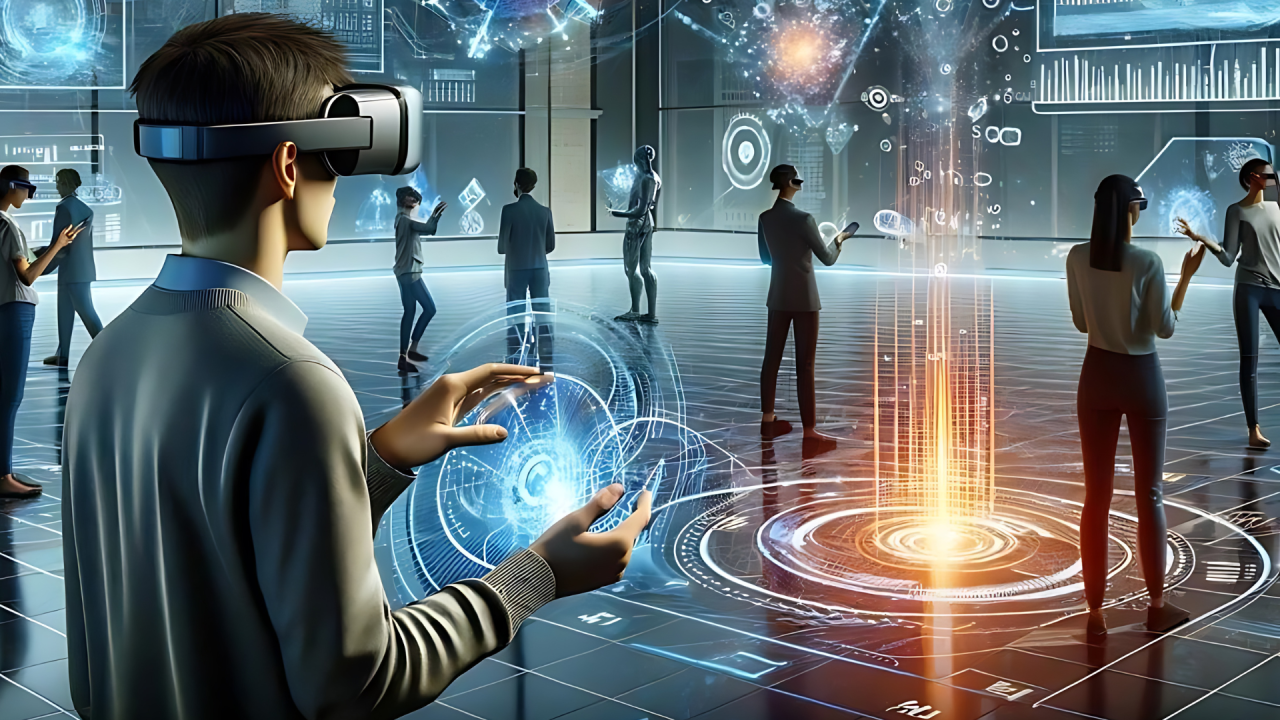
refer to the integration of artificial intelligence (AI) with augmented reality (AR) technologies to create more interactive, personalized, and intelligent augmented experiences. AI enhances AR by enabling it to understand, analyze, and react to the environment in real-time, making the virtual content more relevant and responsive to the user’s context. By leveraging machine learning, computer vision, and natural language processing, AI can significantly improve how AR applications perceive the world, make decisions, and provide users with meaningful and adaptive experiences.
One of the key advantages of AI-driven AR is object recognition and tracking. Using AI, AR systems can identify and track real-world objects more accurately, enabling them to place virtual objects in realistic positions with a higher degree of precision. For instance, in retail, AI-driven AR applications can recognize items in a store and overlay virtual information about product features, reviews, or discounts on top of the physical products. This allows users to get a deeper, more informative shopping experience without needing to search for details manually. AI can also help in detecting and mapping the environment more effectively, adjusting virtual content based on environmental changes such as lighting or the presence of obstacles.
AI-driven AR also enables personalization. By analyzing user data, preferences, and behaviors, AI can tailor AR content to meet individual needs and provide more relevant experiences. For example, in the education sector, AI-powered AR apps can adjust the complexity or type of learning material based on a student's progress, learning style, and needs. In navigation, AI can use AR to provide real-time, context-aware directions, taking into account factors such as the user's walking speed, location, and current environment to suggest the most optimal route. Natural language processing can also be applied, allowing users to interact with AR systems using voice commands or text, making the experience more intuitive and seamless.
5.VR in Space Exploration
VR in Space Exploration
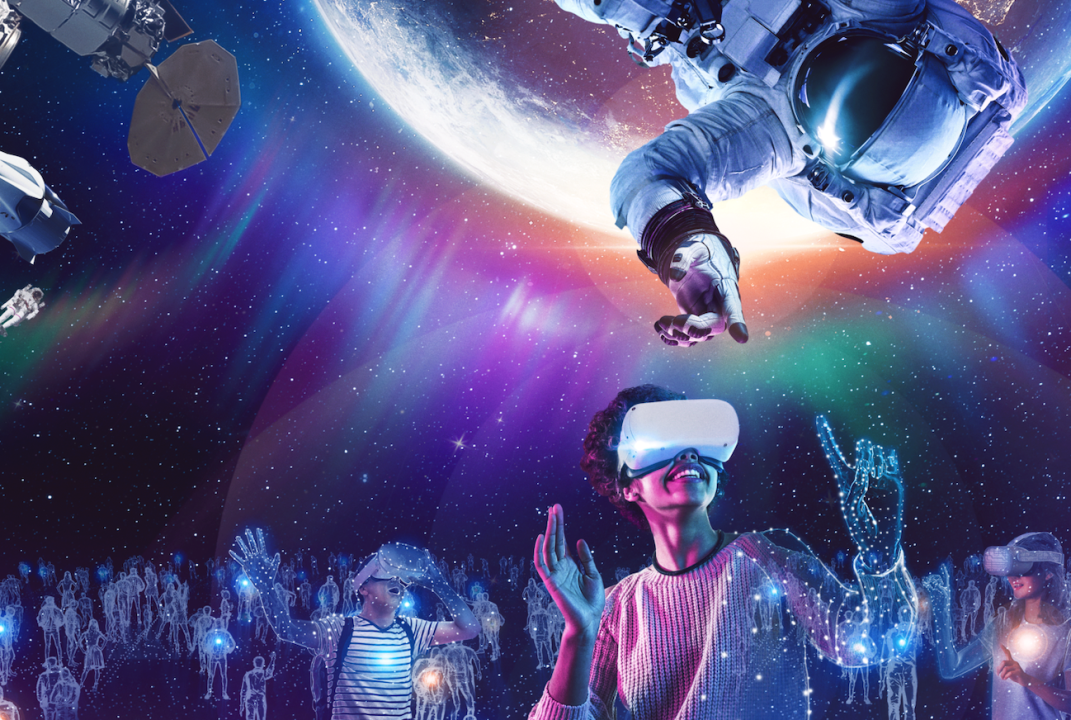
is an innovative application of virtual reality technology that is transforming how scientists, astronauts, and space enthusiasts experience, explore, and interact with space environments. VR enables the simulation of space missions, virtual tours of celestial bodies, and realistic astronaut training without the risks and costs associated with actual space travel. By creating immersive virtual experiences that replicate the complexities of space, VR enhances both training and public engagement in space exploration.
One of the most significant applications of VR in space exploration is astronaut training. Space agencies like NASA have used VR to simulate zero-gravity conditions, spacewalks, and space station environments, enabling astronauts to practice tasks and problem-solving in a controlled virtual environment before performing them in space. These simulations allow astronauts to familiarize themselves with spacecraft systems, respond to potential emergencies, and practice performing complex maneuvers, such as repairs, all while avoiding the physical dangers of being in space. VR also helps with training astronauts for interplanetary missions, providing simulations of environments on Mars or the Moon, where astronauts can train for exploration in these distant, harsh environments without ever leaving Earth.
In addition to training, VR in space exploration provides the public with a deeper connection to space. Through immersive virtual experiences, people can virtually "travel" to the Moon, Mars, or even distant exoplanets, experiencing space from the perspective of an astronaut. Virtual reality also allows for real-time space exploration, where users can embark on interactive missions that simulate the experience of exploring the surface of Mars or flying through a black hole. This not only enhances education but also inspires future generations to pursue careers in space science, technology, and engineering.
6.AR & VR in Smart Cities
AR & VR in Smart Cities
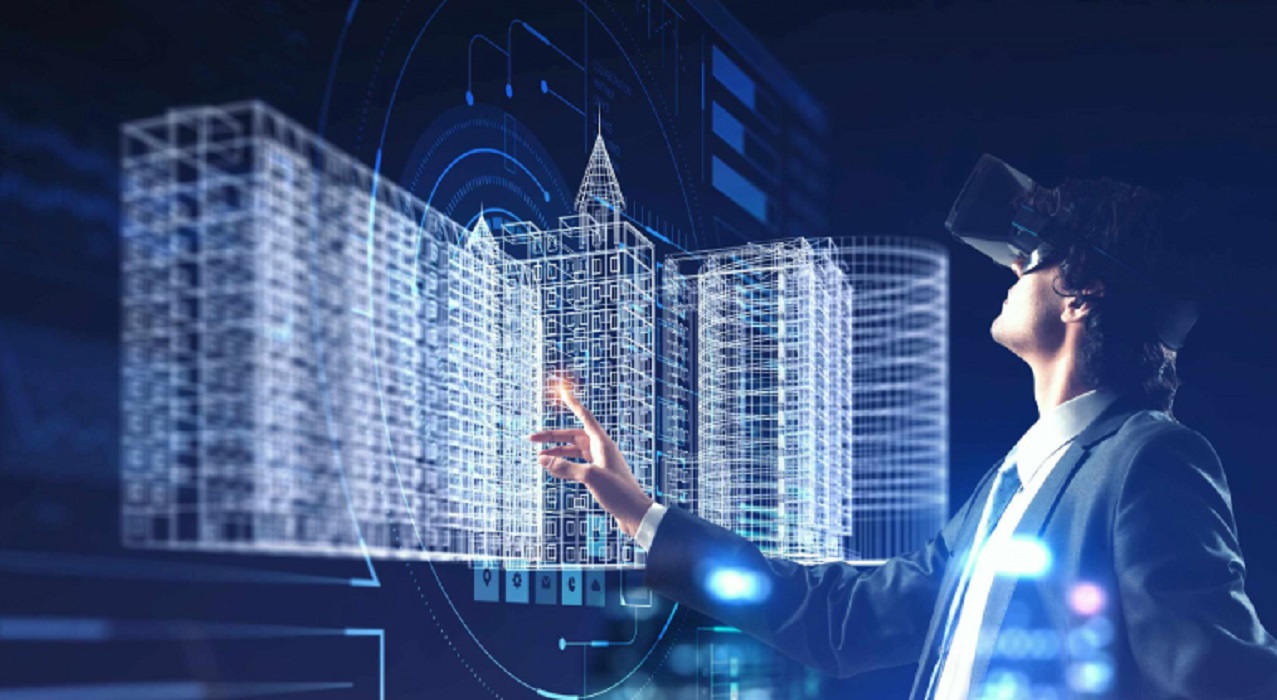
are playing a transformative role in how urban environments are designed, managed, and experienced. These technologies enhance urban living by creating immersive, interactive, and data-driven experiences that improve city planning, infrastructure management, transportation, and even citizen engagement. By integrating augmented reality (AR) and virtual reality (VR) with the Internet of Things (IoT), big data, and AI, smart cities can become more efficient, sustainable, and user-centric.
On the other hand, VR is being used in smart cities for simulation and modeling. By creating fully immersive, 3D virtual environments of entire cities or specific districts, VR helps city planners and local governments simulate traffic flow, energy consumption, and the impact of environmental factors. These simulations help in forecasting urban challenges, such as congestion, pollution, and emergency response strategies, and provide valuable insights into optimizing city systems for better efficiency and sustainability. For instance, VR can simulate how a new traffic management system might alleviate congestion or how a natural disaster could impact urban infrastructure, enabling better preparedness and response plans.
Furthermore, AR and VR contribute significantly to citizen engagement and services in smart cities. Through VR, residents and visitors can experience virtual tours of public services, cultural sites, or even newly proposed developments. This can help citizens better understand urban projects, such as infrastructure improvements or redevelopment plans, and participate in city planning processes. AR applications can also be used to provide real-time data on public services such as waste collection, energy usage, or air quality. In healthcare, for example, AR can enable remote diagnostics or treatment recommendations, while VR can be used for telemedicine or virtual consultations. Together, these technologies make smart cities more interactive, efficient, and inclusive by offering more engaging and accessible ways for residents to interact with their environment and contribute to the city's development.
7.Brain-Computer Interfaces (BCIs)
Brain-Computer Interfaces (BCIs)
are advanced technologies that establish a direct communication pathway between the human brain and external devices. BCIs enable users to control computers, prosthetic devices, and other machines using only their thoughts or brain activity, bypassing the need for physical interaction. This technology has the potential to revolutionize fields like healthcare, neuroscience, and communication, offering life-changing benefits to people with disabilities, enhancing human-computer interaction, and even enabling new forms of cognitive enhancement.
At the core of BCI technology is the detection of brain signals, which can be captured through electrodes placed on the scalp (non-invasive) or implanted directly into the brain (invasive). The most common brain signals used in BCIs are electroencephalography (EEG), which measures electrical activity from the brain’s neurons, and electrocorticography (ECoG), which records activity from the brain's surface. These signals are then processed and translated into commands that can control external devices, such as a cursor on a screen, robotic prosthetic limbs, or even exoskeletons for mobility assistance. As BCIs become more advanced, they can facilitate real-time communication between the brain and machines, opening up exciting possibilities for improving quality of life, particularly for individuals with conditions like locked-in syndrome, ALS, or spinal cord injuries.
In the healthcare sector, BCIs have shown remarkable potential in assisting people with severe motor disabilities. For example, BCIs can allow paralyzed individuals to control prosthetic limbs, move a wheelchair, or even interact with the environment using their thoughts. One of the most notable applications is neuroprosthetics, which helps patients regain lost motor functions by creating a direct interface between the brain and robotic limbs. Additionally, BCIs are being explored as a means of treating neurological disorders like Parkinson’s disease, stroke rehabilitation, and epilepsy. Researchers are also investigating how BCIs could enable communication for patients who are unable to speak or move, such as those in a coma or suffering from advanced neurodegenerative diseases.
.jpg)
8.Mixed Reality for Daily Tasks
Mixed Reality for Daily Tasks is a technology that blends the real and virtual worlds, allowing physical and digital objects to coexist and interact in real-time. Unlike Virtual Reality (VR), which creates an entirely immersive digital environment, and Augmented Reality (AR), which overlays digital content on the real world, MR allows for more seamless interaction between both. This creates opportunities for daily tasks to be more interactive, efficient, and engaging. By enhancing how we interact with our environments, MR has the potential to change the way we approach everyday activities like work, learning, communication, and even entertainment.
One of the primary applications of Mixed Reality in daily tasks is in the workplace, where MR can enhance productivity and collaboration. MR allows workers to use digital tools alongside physical objects, providing a more intuitive way to interact with information. For example, engineers, architects, or designers can use MR headsets to view 3D models of structures or products while interacting with them in real-time. This allows for better visualization, design, and collaboration on projects. MR is also being used for remote assistance, where experts can guide individuals through complex tasks by overlaying helpful information or instructions directly onto the real-world environment. This is particularly useful in sectors like maintenance, surgery, or repair services, where step-by-step guidance can be provided without the need for physical presence.
In education, MR is being used to create interactive learning experiences that are both immersive and practical. For instance, MR can bring historical events to life, allowing students to walk through ancient civilizations or experience science experiments in a safe, virtual setting. In vocational training, MR can simulate real-world tasks, such as operating machinery or performing medical procedures, providing hands-on experience without the risks associated with real-life practice. This approach makes learning more engaging, accessible, and effective, especially in fields where practical, on-the-job training is essential. Personalized learning is another area where MR shines, as it adapts the virtual environment to the needs of each student, providing tailored experiences for different learning styles.
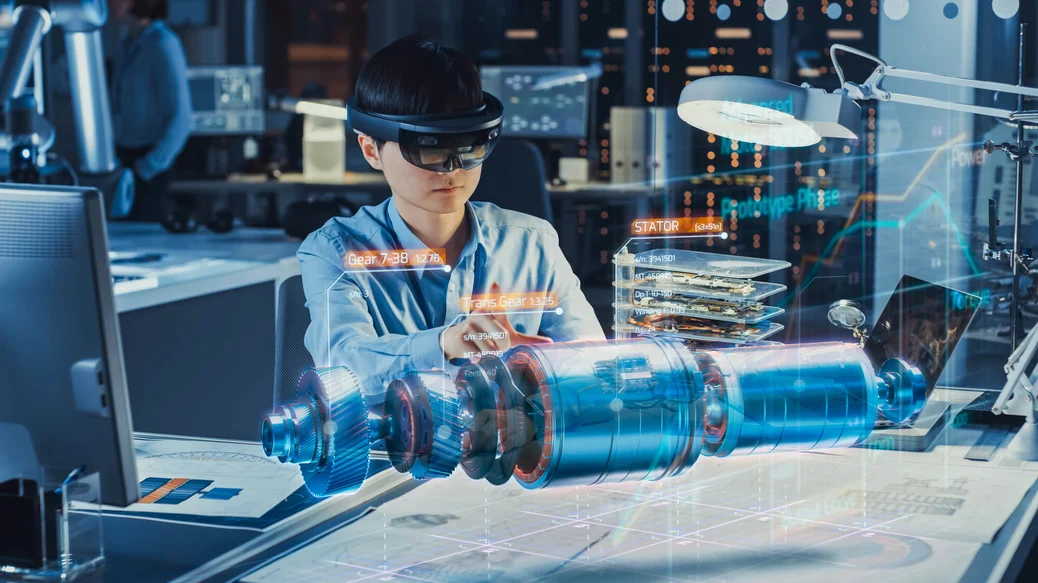
Mixed Reality for Daily Tasks is a technology that blends the real and virtual worlds, allowing physical and digital objects to coexist and interact in real-time. Unlike Virtual Reality (VR), which creates an entirely immersive digital environment, and Augmented Reality (AR), which overlays digital content on the real world, MR allows for more seamless interaction between both. This creates opportunities for daily tasks to be more interactive, efficient, and engaging. By enhancing how we interact with our environments, MR has the potential to change the way we approach everyday activities like work, learning, communication, and even entertainment.
One of the primary applications of Mixed Reality in daily tasks is in the workplace, where MR can enhance productivity and collaboration. MR allows workers to use digital tools alongside physical objects, providing a more intuitive way to interact with information. For example, engineers, architects, or designers can use MR headsets to view 3D models of structures or products while interacting with them in real-time. This allows for better visualization, design, and collaboration on projects. MR is also being used for remote assistance, where experts can guide individuals through complex tasks by overlaying helpful information or instructions directly onto the real-world environment. This is particularly useful in sectors like maintenance, surgery, or repair services, where step-by-step guidance can be provided without the need for physical presence.
In education, MR is being used to create interactive learning experiences that are both immersive and practical. For instance, MR can bring historical events to life, allowing students to walk through ancient civilizations or experience science experiments in a safe, virtual setting. In vocational training, MR can simulate real-world tasks, such as operating machinery or performing medical procedures, providing hands-on experience without the risks associated with real-life practice. This approach makes learning more engaging, accessible, and effective, especially in fields where practical, on-the-job training is essential. Personalized learning is another area where MR shines, as it adapts the virtual environment to the needs of each student, providing tailored experiences for different learning styles.
Comments